
When a loved one requires intensive medical care, families often face difficult decisions about treatment, comfort, and long-term support. For some patients, a hospital-level care arrangement at home may be an option when recommended by the treating medical team and supported by appropriate equipment and trained healthcare professionals.
ICU setup at home brings selected critical-care equipment, nursing support, monitoring facilities, and medical assistance into a patient’s home. With proper assessment, planning, and supervision, home-based critical care can help eligible patients receive appropriate support while remaining close to their families.
Hauz Home Health Care offers home healthcare solutions for families exploring professional patient care at home. In this guide, we explain what a home ICU setup involves, the equipment it may require, its potential benefits, and the important safety considerations families should understand.
What Is an ICU Setup at Home?
An ICU setup at home is a specialized healthcare arrangement designed for selected patients who need advanced monitoring, medical equipment, or ongoing nursing care outside a hospital.
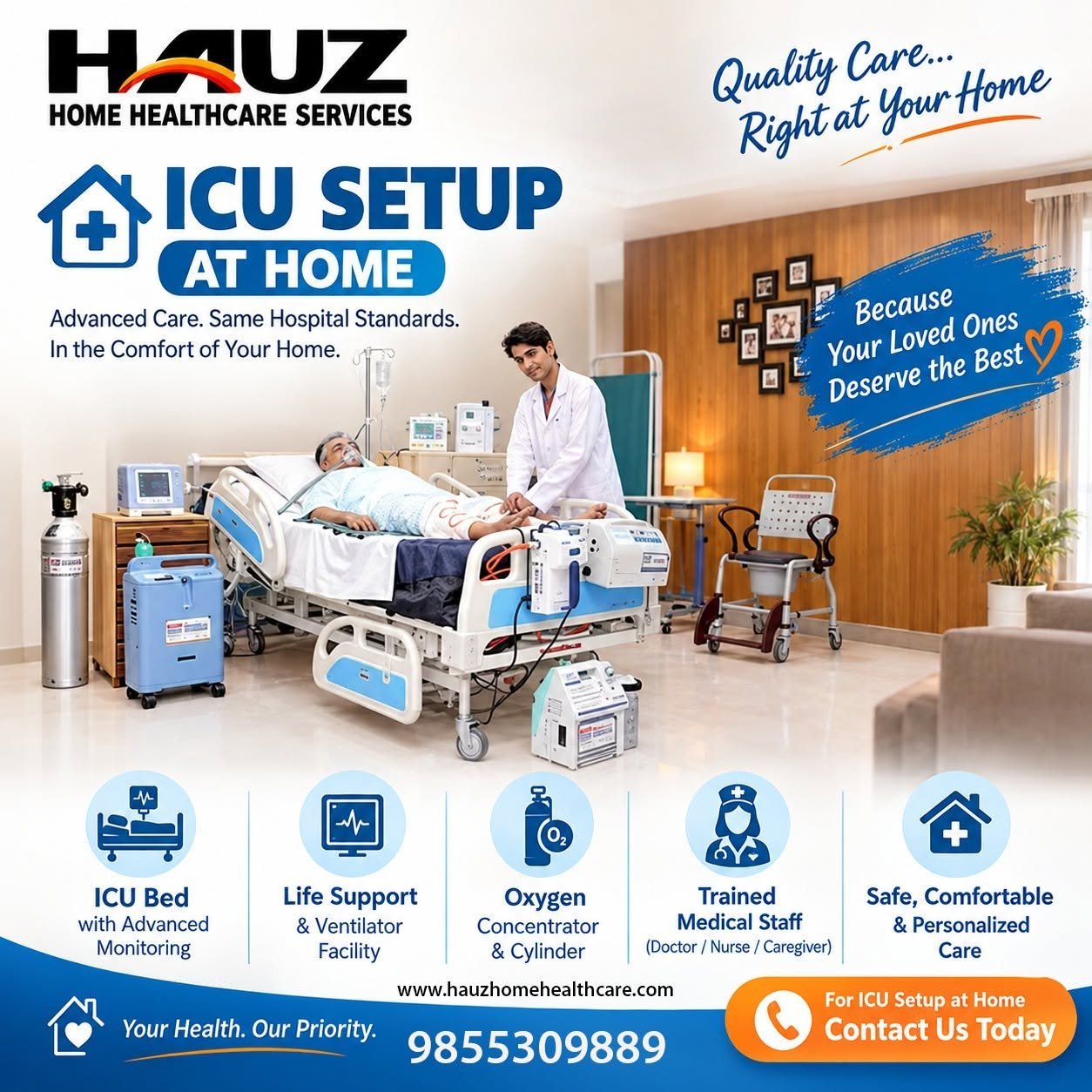
Depending on the patient’s condition, the setup may include an ICU bed, patient monitoring equipment, oxygen delivery equipment, a ventilator when prescribed, and support from qualified nurses or other healthcare professionals.
However, home ICU care is not suitable for every critically ill patient. A doctor must assess the patient’s medical condition, stability, care requirements, and the home’s suitability before recommending this option.
The purpose is to provide an appropriate level of care in a familiar environment without compromising patient safety or delaying access to emergency hospital treatment.
What Equipment Is Required for an ICU Setup at Home?
The equipment required varies according to the patient’s diagnosis, treatment plan, and level of medical support needed.
1. ICU Bed With Adjustable Features
An adjustable ICU bed can help healthcare professionals position patients appropriately for comfort, nursing procedures, and mobility assistance. Side rails and suitable positioning features may help support safer patient handling.
The bed should be selected according to the patient’s physical needs, and caregivers should receive instructions on safe positioning and transfers.
2. Patient Monitoring Equipment
Patient monitors may measure parameters such as heart rate, oxygen saturation, blood pressure, and respiratory rate, depending on the device.
Monitoring can help trained professionals recognize changes in a patient’s condition. Alarm settings, equipment checks, and clear escalation procedures are essential. A monitor cannot replace clinical assessment or guarantee that every medical emergency will be detected.
3. Oxygen Concentrator and Oxygen Cylinder
Some patients require supplemental oxygen as part of their prescribed treatment. Depending on their oxygen requirements and the care plan, the setup may include an oxygen concentrator, oxygen cylinder, or another suitable oxygen delivery system.
Oxygen must be administered according to medical instructions. Cylinders should be secured properly, and oxygen equipment must be kept away from smoking, open flames, and other ignition sources.
4. Ventilator and Life-Support Equipment
Certain patients require ventilatory support because they cannot breathe adequately without assistance. If home ventilation is medically appropriate, the required ventilator, accessories, power arrangements, and backup equipment must be selected by the treating team.
Caregivers and healthcare professionals must receive equipment-specific training, including instructions for responding to alarms, power interruptions, and equipment failure.
Not every home ICU patient needs a ventilator, and ventilation at home requires particularly careful planning.
5. Additional Medical Supplies
Depending on the patient’s needs, the care plan may require suction equipment, feeding support, consumables, infection-control supplies, or other specialized devices.
All equipment should be appropriate for the intended use, maintained according to the manufacturer’s instructions, and checked regularly by trained personnel.
Benefits of ICU Setup at Home
For appropriately selected patients, home-based critical care may offer several potential advantages.
Comfort in Familiar Surroundings
Being at home allows patients to remain in familiar surroundings and close to loved ones. Families may find it easier to participate in daily care when the treatment arrangement permits their involvement.
Personalized Patient Care
A home care plan can be organized around the patient’s medical requirements, personal preferences, and daily routine. Care should be coordinated with the treating doctor and adjusted as the patient’s condition changes.
Family Involvement
Family members can participate in appropriate aspects of care after receiving guidance from healthcare professionals. Clear instructions help them understand their responsibilities, equipment limitations, and when to seek assistance.
Reduced Travel for Eligible Patients
For patients who are medically suitable for home-based treatment, receiving care at home may reduce the need for some routine journeys between home and healthcare facilities.
However, home ICU care does not eliminate the need for hospital visits, investigations, specialist consultations, or emergency transfers when indicated.
Why Trained Medical Staff Are Essential
Advanced medical equipment alone cannot provide safe intensive care. The patient’s needs determine the level of professional staffing required.
Depending on the care plan, support may involve:
- Qualified nurses: For prescribed nursing procedures, monitoring, documentation, and communication with the treating team.
- Doctors: For medical assessment, treatment decisions, and ongoing clinical supervision.
- Trained caregivers: For appropriate personal care, repositioning, and daily assistance within their training and responsibilities.
- Technical support personnel: Where required for equipment setup, maintenance, and troubleshooting.
Before arranging services, families should verify staff qualifications, experience, availability, and emergency response arrangements.
The provider should also clarify who is responsible for clinical decisions, equipment maintenance, and arranging hospital transfer if the patient’s condition deteriorates.
Is Home ICU Care Suitable for Every Patient?
No. Some patients require continuous hospital-based supervision, specialist interventions, or immediate access to emergency treatment that cannot safely be provided at home.
A home ICU arrangement may be considered for selected patients when the treating team determines that their needs can be met safely in the home environment.
Before proceeding, the medical team should assess:
- The patient’s diagnosis and current stability.
- The need for ventilation, oxygen, or continuous monitoring.
- The availability of appropriately trained staff.
- Reliable electricity and suitable backup arrangements.
- Space, cleanliness, infection prevention, and equipment access.
- The family’s ability to participate in care, where appropriate.
- Access to emergency services and a suitable hospital transfer plan.
Families should never arrange a home ICU solely on the basis of equipment availability or cost. Patient safety and medical suitability must come first.
Essential Safety Measures for Home ICU Care
Safety planning is a fundamental part of home critical care.
Follow the prescribed treatment plan: Medicines, oxygen flow rates, ventilation settings, and other treatments must only be changed by authorized healthcare professionals.
Maintain equipment properly: Follow manufacturer instructions, arrange servicing when required, and ensure that staff know how to respond to device alarms.
Prepare for emergencies: Keep emergency contact details accessible and establish a clear plan for power failure, equipment malfunction, breathing difficulties, or sudden deterioration.
Maintain hygiene: Use appropriate hand hygiene, cleaning, and infection-prevention practices. Medical devices and consumables must be handled according to professional instructions.
Know when to seek urgent help: Severe breathing difficulty, unresponsiveness, sudden deterioration, or other serious symptoms require immediate emergency assessment. Do not delay emergency care while attempting to troubleshoot equipment.
Why Choose Hauz Home Health Care?
Hauz Home Health Care provides home-based healthcare solutions for individuals and families seeking support outside traditional healthcare settings.
For families considering an ICU setup at home, discussing the patient’s needs with a healthcare provider is an important first step. The required equipment, staffing arrangements, service availability, and safety measures should be clarified before care begins.
Hauz Home Health Care can be contacted to enquire about available home healthcare services and discuss the next steps for arranging appropriate support.
Website: https://hauzhomehealthcare.com/
Phone: +91 98553 09889
Contact the team to discuss your requirements and confirm whether the necessary services and equipment are available for your situation.
Frequently Asked Questions About ICU Setup at Home
1. What is included in an ICU setup at home?
Depending on the patient’s requirements, it may include an adjustable ICU bed, patient monitor, prescribed oxygen equipment, ventilator, nursing supplies, and professional care. The exact setup depends on medical assessment.
2. Can a ventilator be used at home?
Yes, certain patients can receive home ventilation when the treating team determines it is appropriate and suitable equipment, trained personnel, backup arrangements, and emergency plans are in place.
3. Does home ICU care require a nurse?
Patients requiring intensive clinical support generally need appropriately qualified healthcare professionals. The type and level of staffing should be determined by the patient’s condition and care plan.
4. Is an ICU setup at home safe?
It can be appropriate for selected patients when the arrangement meets their clinical needs and includes suitable equipment, trained staff, monitoring, and an emergency transfer plan. It is not a substitute for hospital care when hospital-level interventions are necessary.
5. How can I arrange an ICU setup at home?
Consult the treating doctor first. Once home care is considered suitable, contact a healthcare provider to discuss the assessment, required equipment, staff qualifications, availability, costs, and emergency arrangements.
Conclusion
An ICU setup at home can be an important care option for selected patients who need advanced medical support in familiar surroundings. The right equipment, trained professionals, careful monitoring, and a reliable emergency plan are essential to making this arrangement appropriate.
If your loved one requires specialized nursing or advanced home healthcare support, Hauz Home Health Care can help you explore the available options.
Hauz Home Health Care — Quality Care, Right at Your Home.
Website: www.hauzhomehealthcare.com
Contact: +91 98553 09889